
How Do Citation Consistency and NAP Management Influence Local SEO?
These days, local SEO involves more than merely adding keywords and waiting for results. In the cutthroat digital world of today, particularly in 2026, visibility is contingent upon trust. Search engines seek evidence of your company’s legitimacy, dependability, and real-world activity. This is where NAP management and reference consistency subtly but significantly influence your local SEO results.
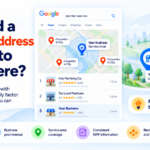
Name, Address, and Phone Number is frequently identified as NAP. Authorities are internet references to this material found on review sites, social media, company directories, and maps. Search engines are more comfortable endorsing your company when this information remains identical across all platforms. When they’re not, trust is replaced with uncertainty.
Reference consistency and NAP upkeep, which boost search engine trustworthiness and validate a company’s existence in the real world, are crucial components of local SEO. In 2026, these components will still be necessary to appear in hotly fought local search results.
Let’s understand why this matters so deeply.
Influence on Search Engine Rankings
Reliable NAP data is seen by search engines such as Google as a powerful indicator of trust. When your company’s information is consistent across several platforms, it makes it very evident that your company is real, active, and deserving of attention.
According to investigations, local search rankings may be raised by up to 16% by keeping accurate and uniform NAP data. Just that distinction has the power to propel your company from page two into the spotlight, where actual clients are looking.
Another important factor in Google Local Pack exposure is consistency. A significant portion of local clicks go to the Local Pack, which shows the top three map results. Companies have a far higher probability of showing up there if their citations are clear and consistent.
Another overlooked factor is authority consolidation. When citations are identical, they reinforce one another, strengthening what is often called “citation authority.” When details vary, that authority gets diluted. Search engines may treat those variations as separate businesses, weakening your overall ranking power.
In simple terms, inconsistency divides your strength, while consistency multiplies it.
Verification of Proximity and Relevance
Local SEO is built on three pillars: Relevance, Proximity, and Prominence. NAP data directly supports all three.
Proximity depends heavily on your address. When your NAP is accurate, search engines can clearly connect your business to a specific location. This allows algorithms to measure how close you are to users searching for services “near me.”
Relevance is just as significant. Precise listings aid search engines in comprehending your company’s offerings and target audience. Google can reliably match your company with the appropriate search results if your information is consistent.
Even a small address variation can confuse location signals. Over time, that confusion can push your business out of searches you should be winning.
Impact on Voice Search and AI Results
Search habits are rapidly changing. By 2026, voice search and AI-powered results will be more important in helping consumers find nearby companies.
Voice assistants like Google Assistant, Siri, and Alexa rely heavily on structured and verified data. They pull business details from trusted sources such as Google Business Profile. If your NAP information conflicts across platforms, voice assistants may skip your business entirely when making recommendations.
AI Overviews add another layer. Google’s AI-generated summaries combine data from multiple trusted sources. Businesses with strong, consistent citations are far more likely to be featured accurately in these overviews. Inconsistent data reduces confidence, and AI systems tend to avoid uncertainty.
If your information is unclear, emerging technologies simply move on to a competitor who appears more reliable.
User Trust and Conversion
Local SEO is not only about rankings. It is also about real people trying to contact real businesses.
Research shows that 73% to 80% of consumers lose trust when they find incorrect or inconsistent contact details online. From a user’s perspective, mismatched phone numbers or addresses feel careless and unprofessional.
Accurate NAP information directly impacts lead generation. When users cannot reach you or arrive at the wrong location, frustration builds quickly. Many will not try again. They will choose a competitor whose information feels dependable.
Trust is fragile online. Consistency protects it.
Effective NAP Management Strategies for 2026
It takes constant effort to maintain good NAP consistency. Companies that handle this as a one-time effort frequently fall behind.
Start by standardizing your format. Select a single, official form of your company’s name, address, and phone number. For example, you can smartly use “123 Main Street” or “123 Main St.” for a search. Most firms are unaware of how important little formatting variations are.
Every three to six months, conduct routine audits. This aids in locating inaccurate listings, fake profiles, or illegal modifications. Listings are often created by robotic directories without authorization, which might harm your visibility.
To cut down on risk and save time, use automation technologies. Accurate NAP data is synchronized throughout the web by platforms such as Moz Local, BrightLocal, and Yext, which search hundreds of directories. These technologies are particularly useful for companies that have several sites.
Implement structured data on your website. Adding LocalBusiness schema markup gives search engines a clear, authoritative version of your NAP details. This acts as a reference point when other data sources conflict.
Consistency is not about perfection once. It is about discipline over time.
Why Citation Consistency Still Matters So Much
In 2026, local search competition is fierce. More businesses are fighting for the same local attention. Algorithms have become smarter, but they still rely on clear signals.
Citation consistency and NAP management quietly influence rankings, visibility, voice search results, AI summaries, and customer trust. They form the digital foundation of your local presence.
When your information is accurate everywhere, search engines reward you. When users trust what they see, they choose you.
Local SEO success is built on clarity. And clarity begins with consistency.