Travel & Tourism SEO Case Study
12 months, 5× organic traffic for Indonesia's tailor-made tour specialist.
Sessions
7K → 49K
Total users
6K → 46K
30 → 131

The client
About Come 2 Indonesia
Bali tours
Komodo & Labuan Bajo trips
Borneo orangutan houseboats
Bromo & Ijen tours
Gili & Nusa islands
Tailor-made itineraries
Honeymoon packages
Diving & surf trips
MICE & incentive travel
B2B receptive services
Scope of work
6 problems between a local Indonesia expert and page one
10K organic visits a month for a 17-destination tour operator
For a company covering all of Indonesia, organic traffic was very low. Most travelers planning a trip there landed on large booking sites and travel marketplaces instead.
12K ranking keywords, but only 30 in the top 3
The site ranked for thousands of terms, but nearly all of them sat on pages two and three. Searches from people ready to book rarely reached the top positions that get clicks.
Authority
An Authority Score of 8 against global travel platforms
Up against Viator, GetYourGuide, Klook and large tour marketplaces, the site had too few good links from travel publications, blogs and tourism directories to win competitive terms.
Technical health
Heavy sliders and images slowing every page
Large hero sliders, uncompressed destination photos and render-blocking scripts made pages slow, especially on mobile. Google also wasted crawl time on the English/Spanish structure.
On-page
Destination and trip-type pages competing with each other
With 17 destinations and 17+ trip types, many pages targeted the same terms. Titles, headings and image alt text were generic and not mapped to keywords.
Content
No pages answering how travelers actually plan
There was little content on itineraries, the best time to visit, how to get there or entry requirements: the searches travelers make weeks before choosing a tour operator.
How we did it
The 6-phase build, in the order it had to happen
01 – Assessment
Keyword research and intent mapping
We mapped search demand in English and Spanish across all 17 destinations and trip types, grouped terms by intent (planning, comparison, booking) and gave each keyword group one page, so the site's pages stopped competing with each other.
02 – Diagnosis
Technical SEO and crawl control
We compressed destination images, cut slider and script weight, fixed hreflang between the English and Spanish versions, cleaned up sitemaps and added tour, breadcrumb and FAQ schema.
03 – Alignment
On-page optimization of tour and destination pages
We rewrote titles, meta descriptions and headings on the main tour and destination pages, replaced generic alt text, and added the duration, highlights and itinerary details travelers search for.
04 – Mobilisation
Internal linking and destination architecture
Each destination hub now links to its tours, trip types and guides, and blog posts link back to the tours that convert, passing authority from guide content to bookable pages.
05 – Strengthening
Content development and off-page link outreach
We published itinerary guides, best-time-to-visit pages and destination guides, and earned links from travel blogs, tourism directories and niche publications, raising Authority Score from 8 to 30.
06 – Maintenance
Measurement in GA4 and monthly iteration
Each month we tracked rankings, organic sessions and engagement in GA4 and Semrush, refreshed weak pages and shifted effort to the destinations and trip types growing fastest.
Results — before vs. after
4 metrics, 12 months, every one up
Sessions
49K
+600%Total users
46K
+666.7%Event count
60K
+650%Authority Score
30
275%×5
Five times the organic traffic and 131 terms in Google's top 3
| GOOGLE SEARCH CONSOLE | Jul 2025 | Jul 2026 | CHANGE |
|---|---|---|---|
| Organic traffic (Semrush) | 10K | 50K | +400% |
| Organic keywords | 12K | 17K | +41.7% |
| Keywords in top 3 | 30 | 131 | +336.7% |
| Authority Score | 8 | 30 | +275% |
| Total users | 6K | 46K | +666.7% |
| Sessions | 7K | 49K | +600% |
| Event count | 8K | 60K | +650% |
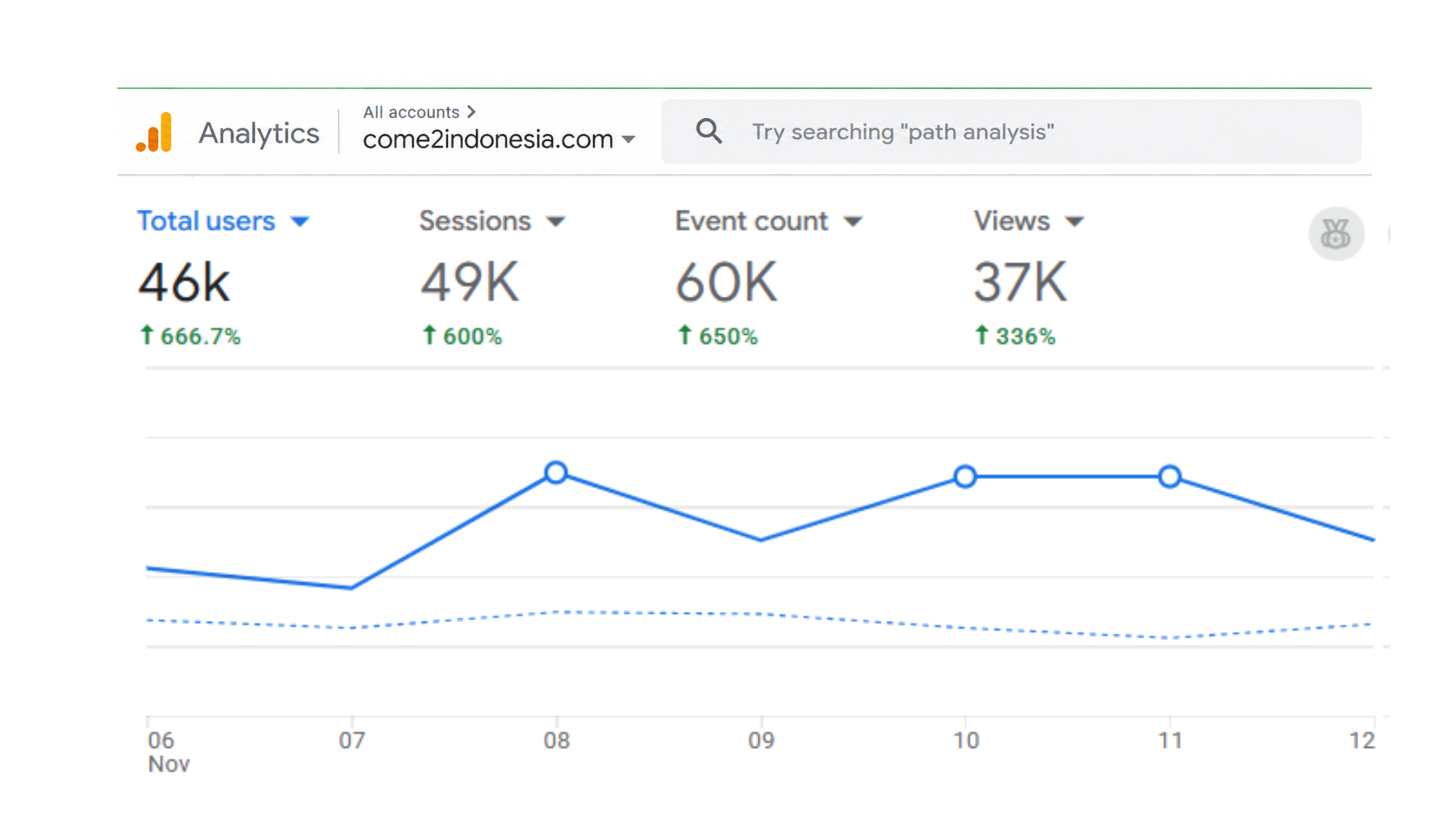
Google analytics GA4
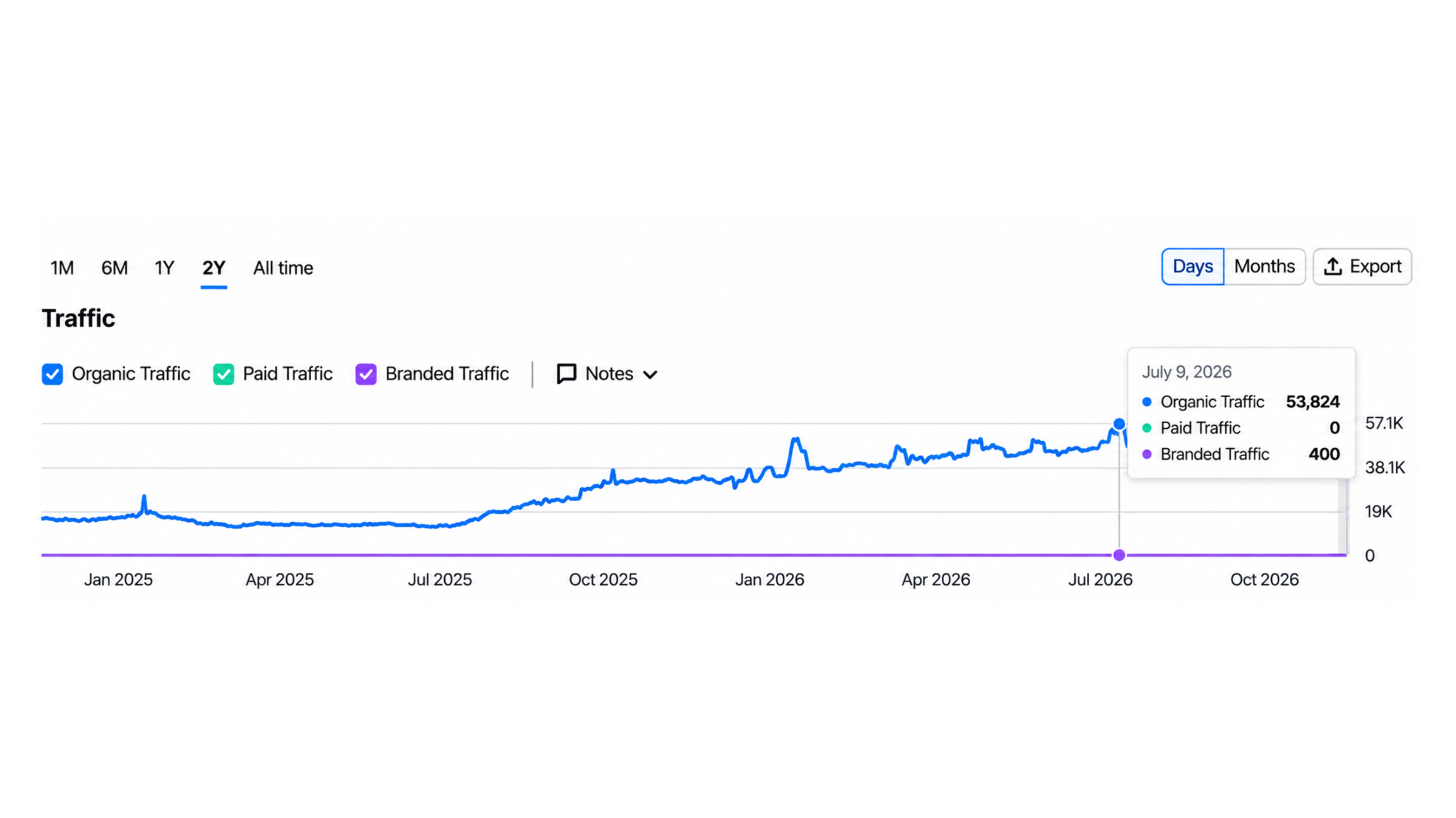
SEMrush Organic traffic
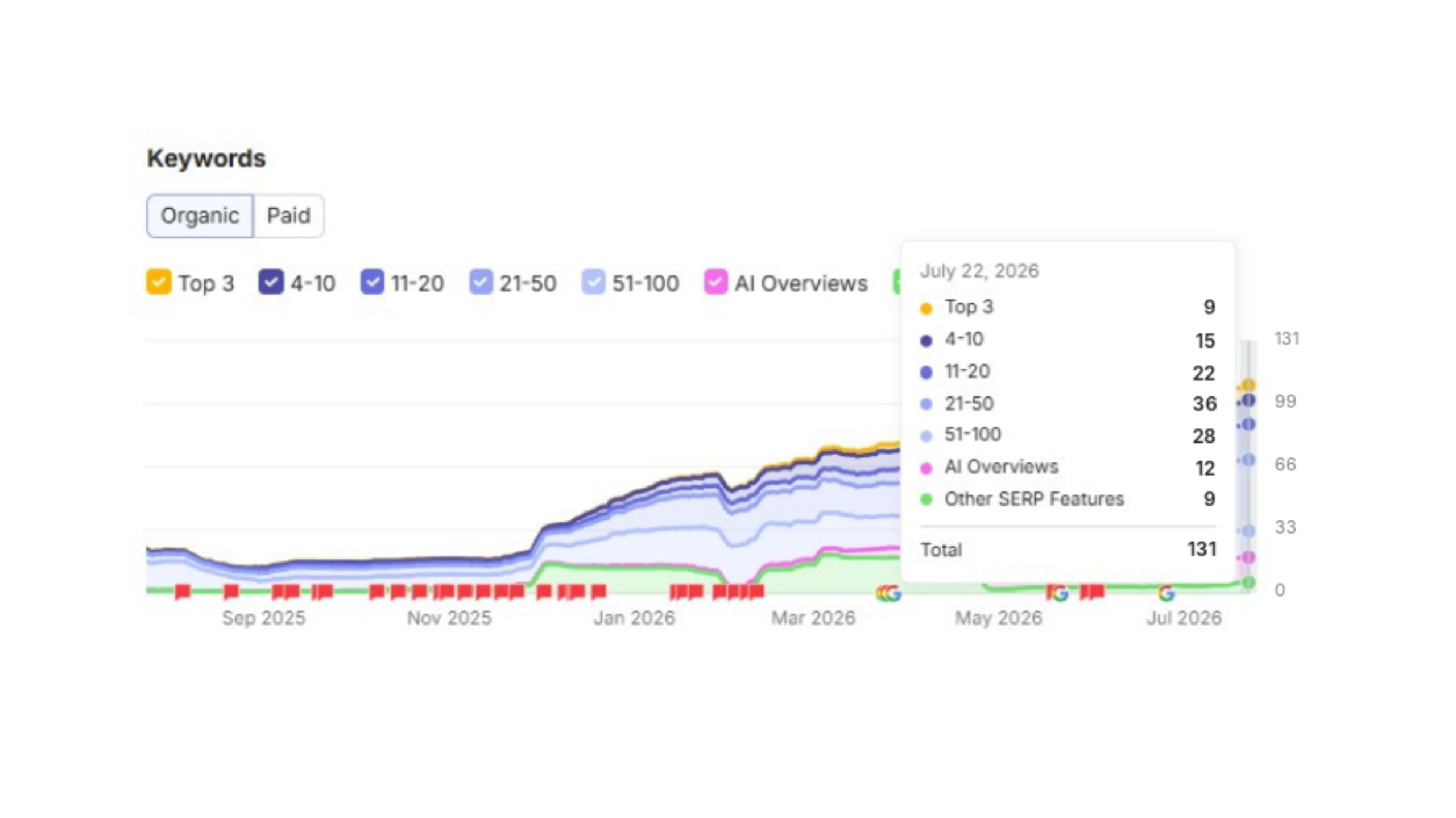
semrush organic keywords
Google rankings
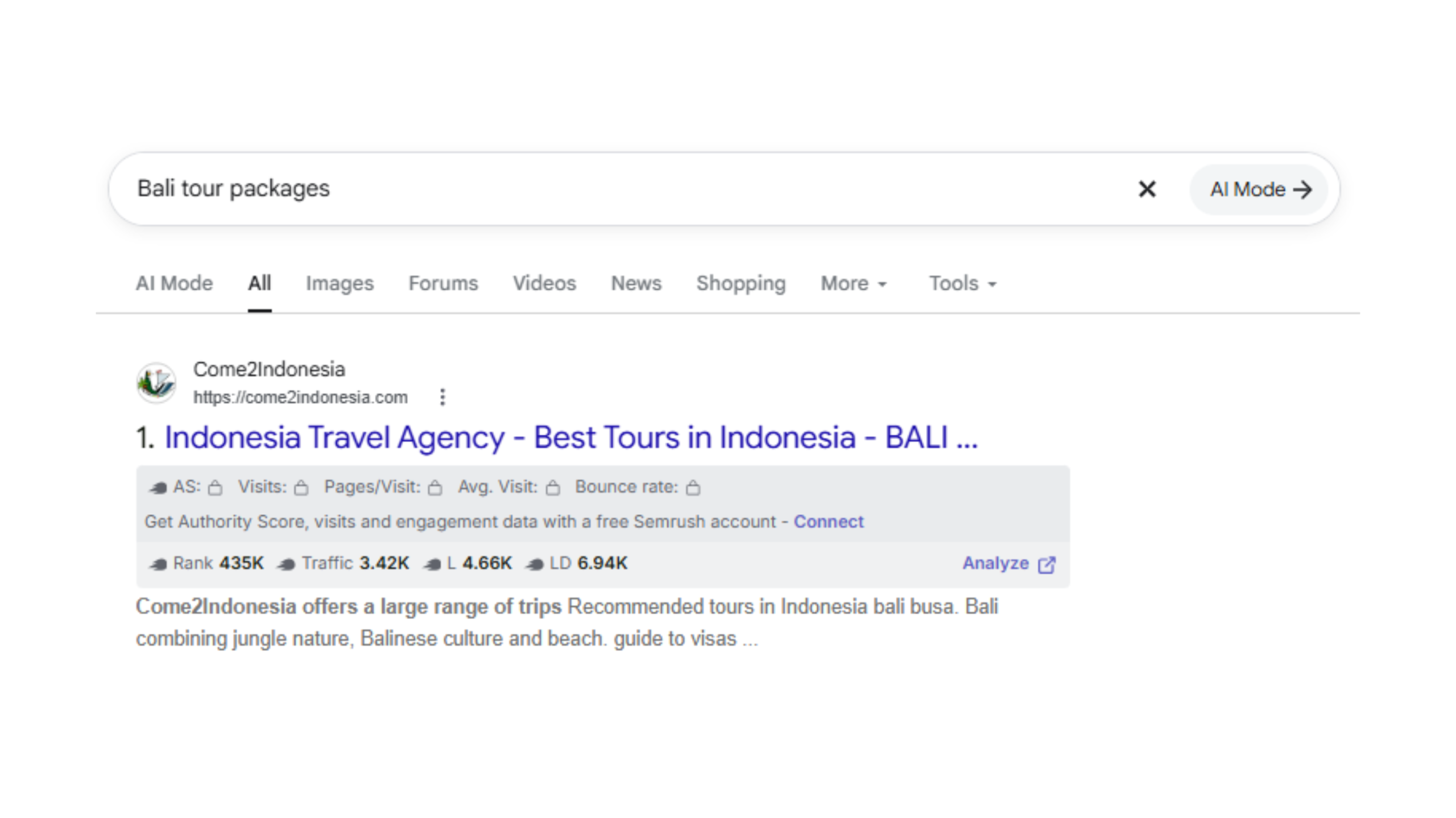
[10] high-intent Indonesia travel keywords at position [#1]
| KEYWORDS | MONTHLY VOLUME | BEFORE | AFTER |
|---|---|---|---|
| Indonesia tour packages | 2,400 | NA | #1 |
| Indonesia travel | 5,400 | NA | #1 |
| Indonesia tours | 1,900 | NA | #1 |
| Bali tour packages | 6,600 | NA | #1 |
| Indonesia vacation packages | 1,000 | NA | #1 |
| Komodo Island tours | 1,300 | NA | #1 |
| Borneo orangutan tour | 880 | NA | #1 |
| Sumatra orangutan tour | 590 | NA | #1 |
| Indonesia adventure tours | 480 | NA | #1 |
| Indonesia diving tours | 390 | NA | #1 |
Audience insight
What the traffic data showed
[Mobile or desktop share from GA4, plus one sentence on what it means for how travelers research trips.]
[Top countries from GA4, e.g. Spain, the US and the UK, with growing traffic from Latin America.]
Key Results
Successfully ranked #1 on Google
Rank #1
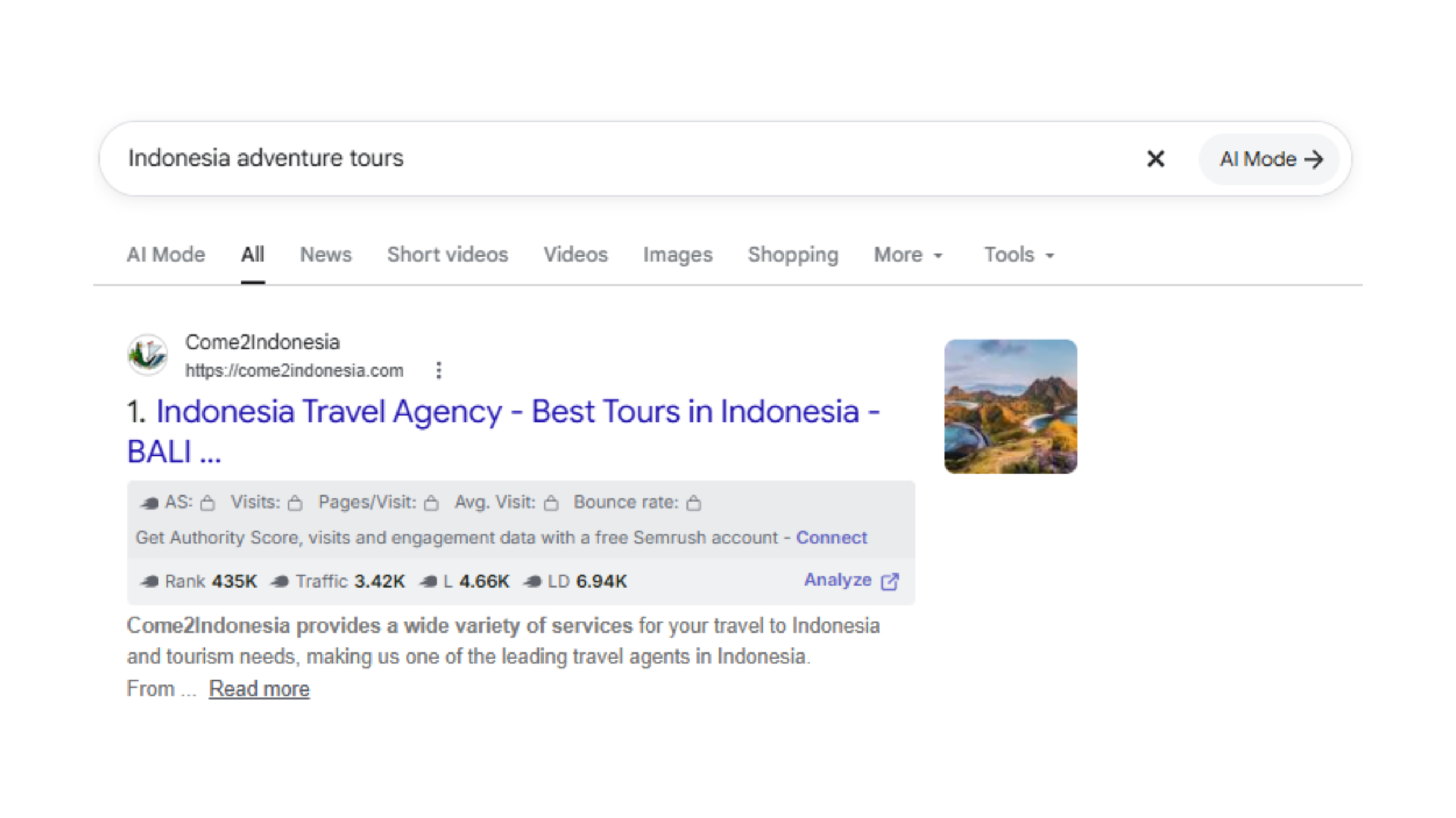
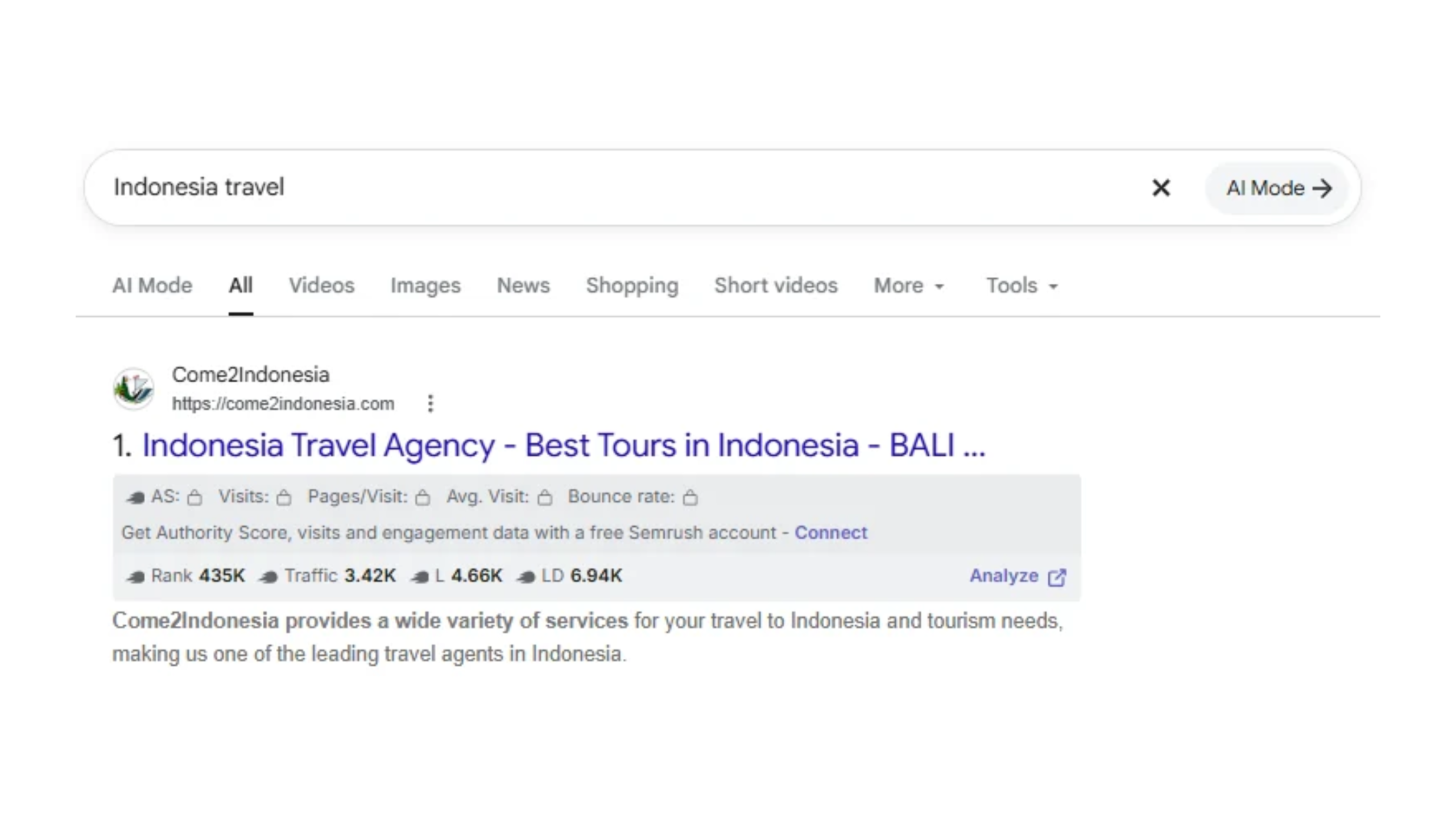
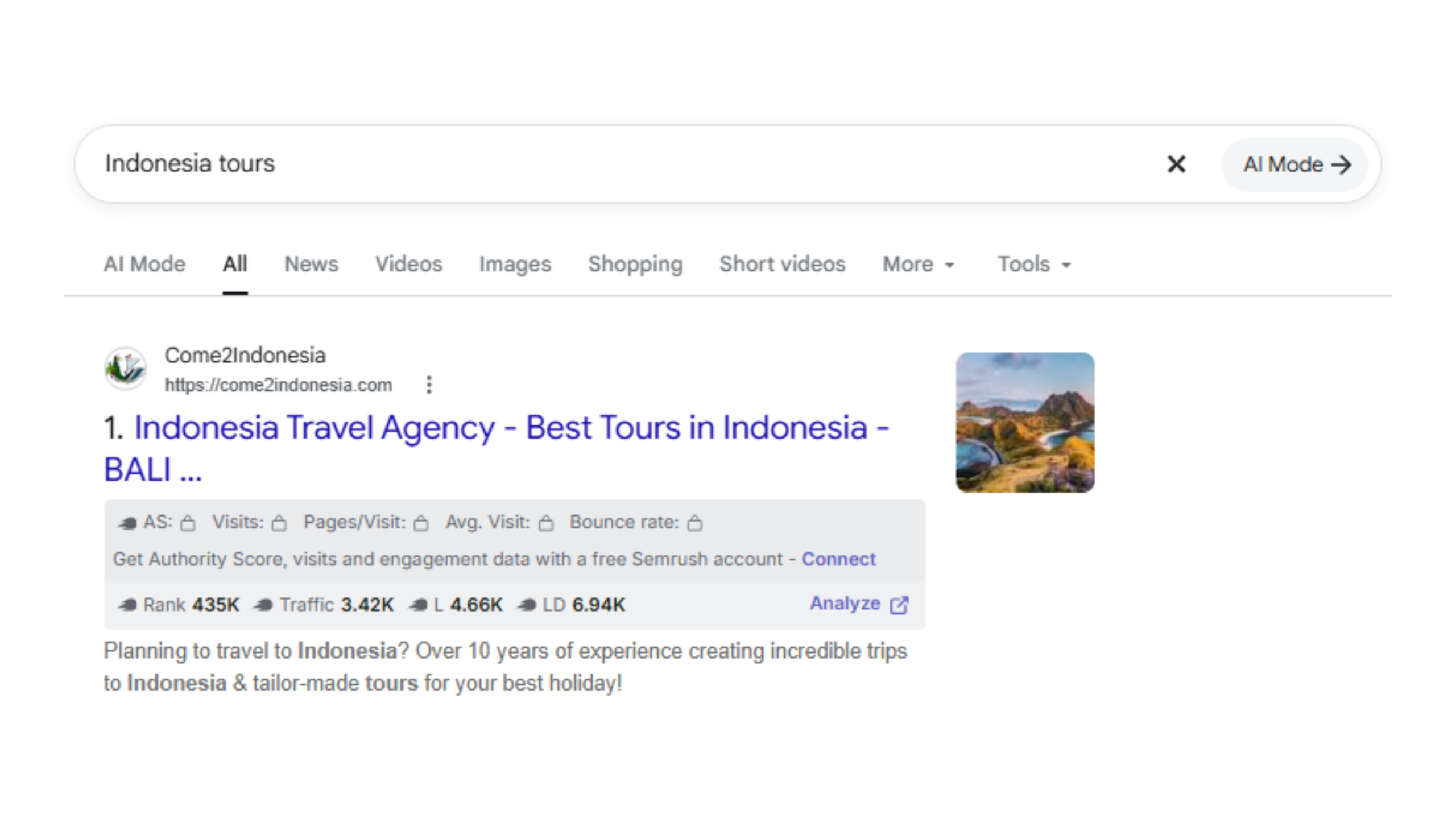
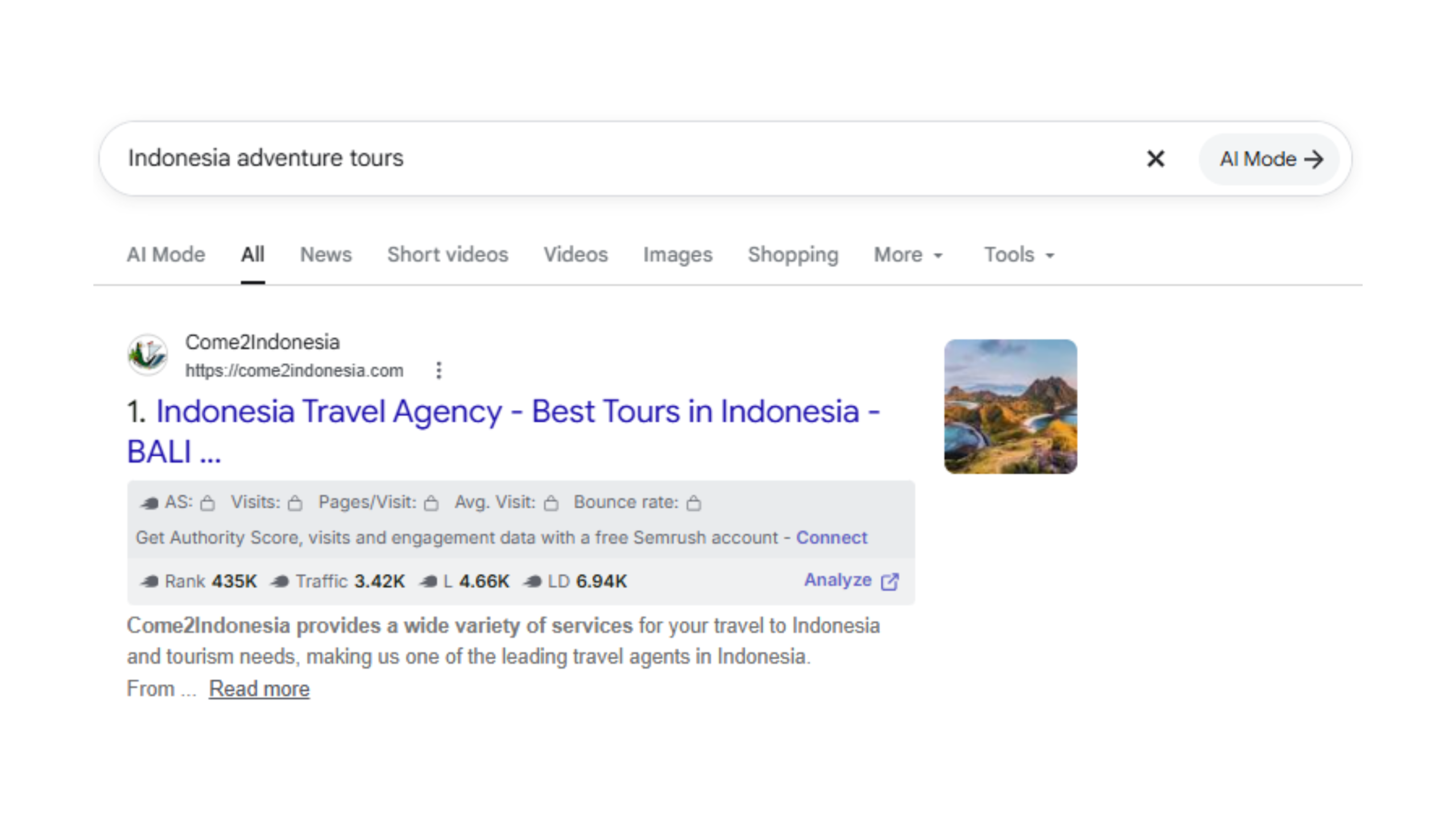
12 months, 131 top-3 rankings, and a market where one booking is a two-week itinerary
Own the planning search, own the booking
We targeted itinerary, best-time-to-visit and destination-guide searches and linked each one to a bookable tour.
Technical first, content second
We fixed page speed, hreflang and crawl issues before publishing, so new content could rank quickly.
Authority from the right sources
Links from travel blogs, tourism directories and destination publications took Authority Score from 8 to 30.
Measured monthly
GA4 and Semrush ranking reviews set the priorities for each month's work.