
Tourism SEO Case Study
Within 1 year: organic traffic doubled, users up 550%, and 9 destination keywords ranked #1 for Northern France's official tourism site.
The client
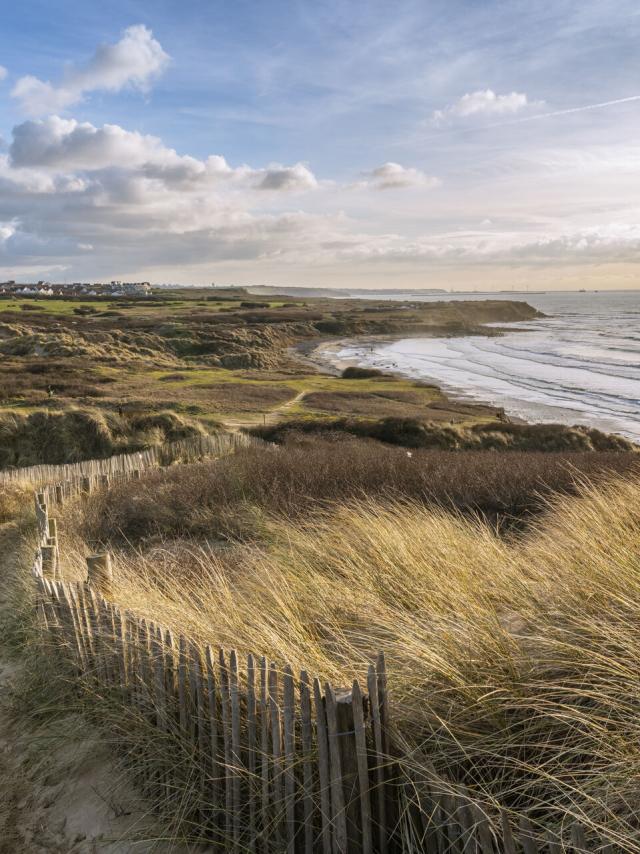
About Hauts-de-France Tourism
Lille city breaks
Amiens & the cathedral
Opal Coast
Baie de Somme
Somme battlefields
Le Touquet
Chantilly
Dunkirk
Family holidays
Scope of work
6 problems between an official tourism board and page one
10,710 visits a month for an entire region
Against a full region's worth of destinations, travellers searching "Northern France" were landing on TripAdvisor, blogs and aggregators instead of the official source.
The planning keywords were nowhere
"Northern France holidays", "places to visit in Northern France", "Opal Coast France" — the searches run just before booking — had no ranking at all.
Heavy imagery throttling crawl & speed
Rich destination photography and legacy templates slowed load times, while crawl inefficiencies kept parts of the destination catalogue out of Google's index.
Destination pages without clear targets
Meta titles, descriptions and headings lacked focused keywords, so Lille, Amiens and Opal Coast pages competed with one another instead of each owning its searches.
Nothing built for how travellers search
"Things to do in…", family-holiday, itinerary and seasonal queries had no dedicated pages written to answer them, leaving that intent to third-party travel sites.
Thin link profile for an official brand
Few authoritative links from travel publications, press and tourism directories kept domain authority below what the head terms required.
The strategy
The 6-phase build, in the order it had to happen
01 – Assessment
Keyword research & intent mapping
In-depth research across high-volume destination terms ("Northern France", "Lille tourism") and long-tail planning queries ("things to do in Amiens", "family holidays in France"), with every term mapped to a single owning page so city, coast and guide pages stopped competing for the same searches.
02 – Diagnosis
Technical SEO & crawl control
Compressed and lazy-loaded heavy destination imagery to lift page speed, fixed crawl errors, redirects and broken internal links, implemented TouristAttraction, Organization and FAQ schema, and refreshed XML sitemaps so the full destination catalogue reached the index.
03 – Alignment
On-page optimisation across the money pages
Rewrote meta titles, descriptions and headings across Lille, Amiens, Opal Coast and regional landing pages with focused targets, and optimised destination imagery with descriptive alt text — critical in a category where travellers browse visually.
04 – Mobilisation
Internal linking & destination architecture
Strengthened internal linking between regional hubs, city pages and supporting guide content (things to do, itineraries, seasonal guides), so authority earned anywhere on the site flowed into the pages carrying trip-planning intent.
05 – Strengthening
Content development & off-page authority
Built SEO-focused guides answering the questions travellers actually ask — things to do, places to visit, family itineraries — refreshed existing pages, and ran a link programme through travel publications, press outreach and tourism directories.
06 – Maintenance
Measurement, tracking & iteration
Tracked users, sessions and engagement in GA4, monitored ranking movement across the full keyword set in Semrush, and fed the results back into content and optimisation priorities month over month.
Results — before vs. after
Every core metric more than doubled
Organic traffic
22,608
+111%Organic keywords
5,932
+150%Total users
13K
+550%Sessions
16K
433| GOOGLE SEARCH CONSOLE | BEFORE | AFTER | CHANGE |
|---|---|---|---|
| Organic traffic (Semrush) | 10,710 | 22,608 | +111% |
| Organic keywords | 2,377 | 5,932 | +150% |
| Total users (GA4) | 2K | 13K | +550% |
| Sessions (GA4) | 3K | 16K | +433% |
| Total users | 6K | 46K | +666.7% |
| Sessions | 7K | 49K | +600% |
| Event count | 8K | 60K | +650% |
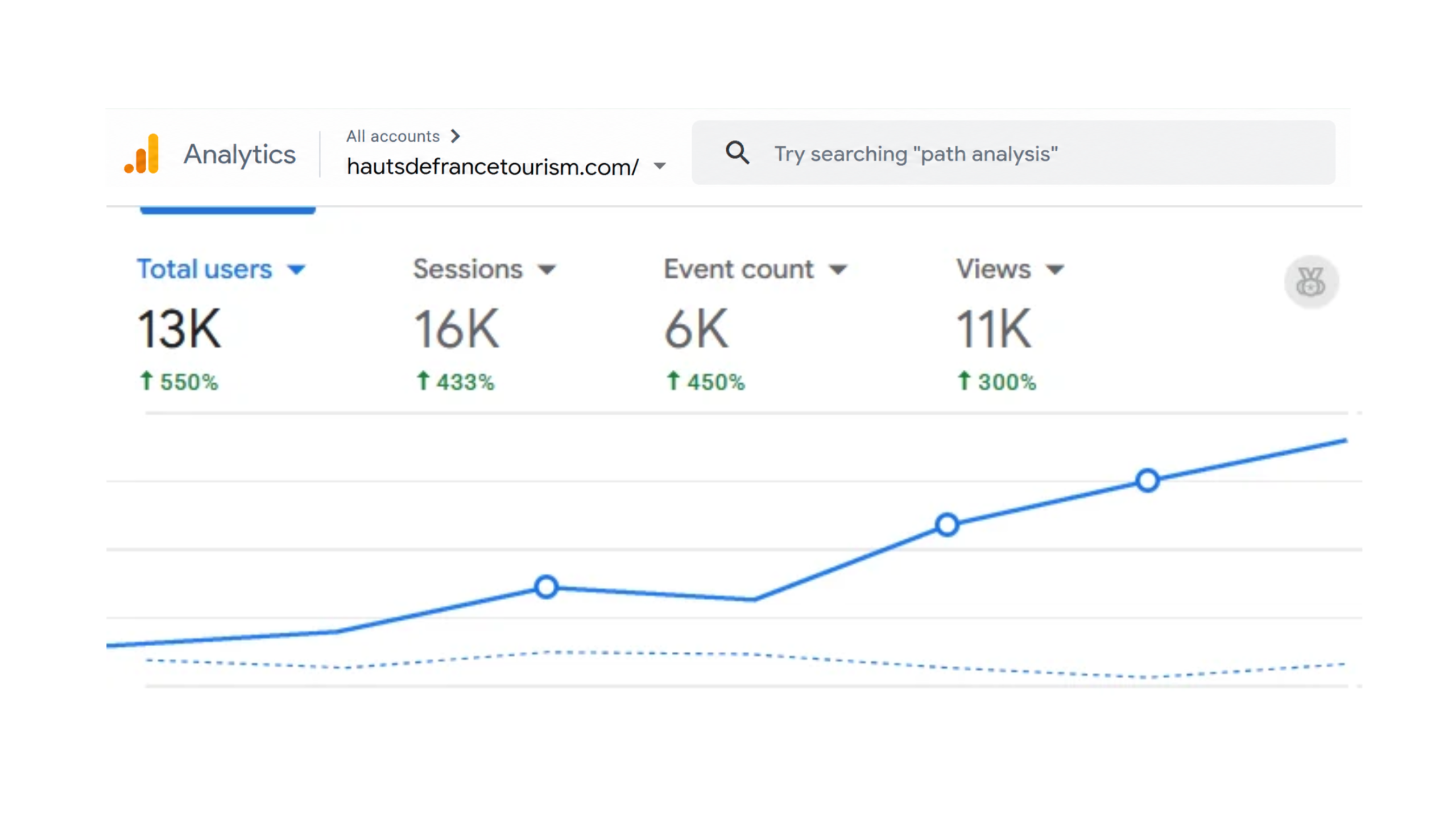
Google analytics GA4
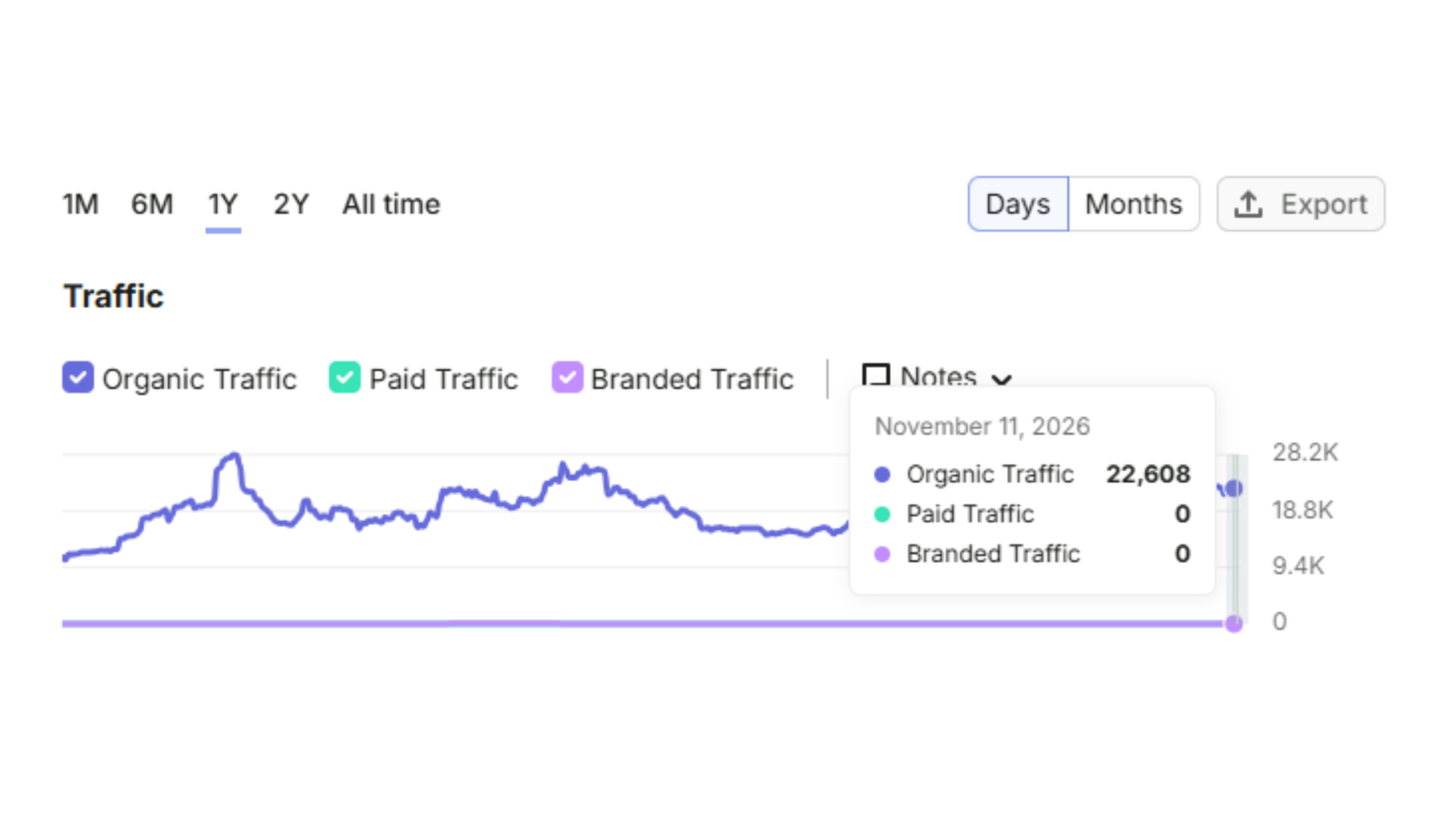
SEMrush Organic traffic
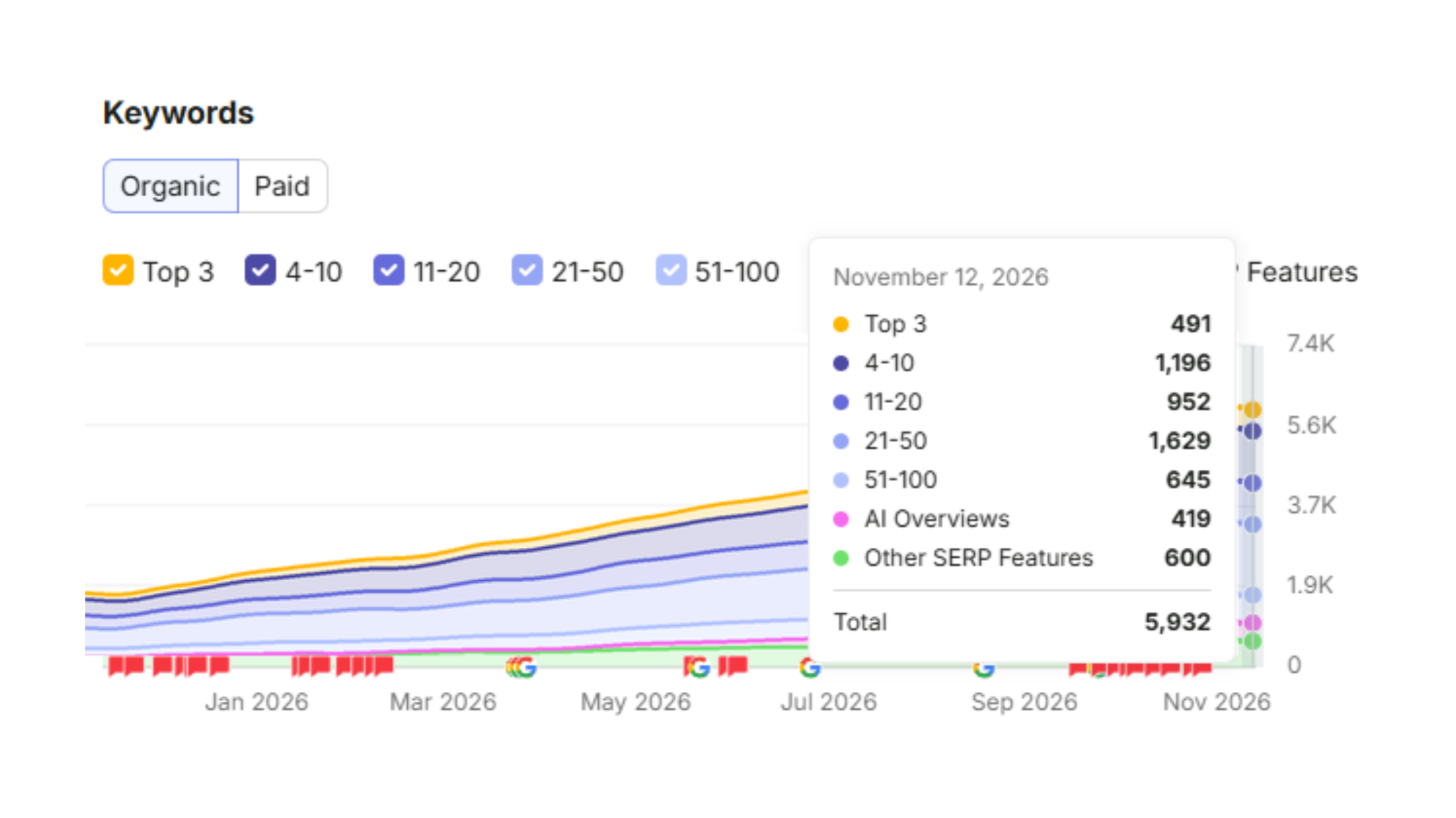
semrush organic keywords
Google rankings
9 high-intent destination keywords at position #1
| KEYWORDS | MONTHLY VOLUME | BEFORE | AFTER |
|---|---|---|---|
| Northern France | 1,200 | NA | #1 |
| Things to do in Lille | 1,100 | NA | #1 |
| Lille tourism | 1,000 | NA | #1 |
| Family holidays in France | 1,000 | NA | #1 |
| Things to do in Northern France | 980 | NA | #1 |
| Places to visit in Northern France | 900 | NA | #1 |
| Northern France holidays | 860 | NA | #1 |
| Opal Coast France | 820 | NA | #1 |
| Things to do in Amiens | 800 | NA | #1 |
Key Results
Successfully ranked #1 on Google
Rank #1
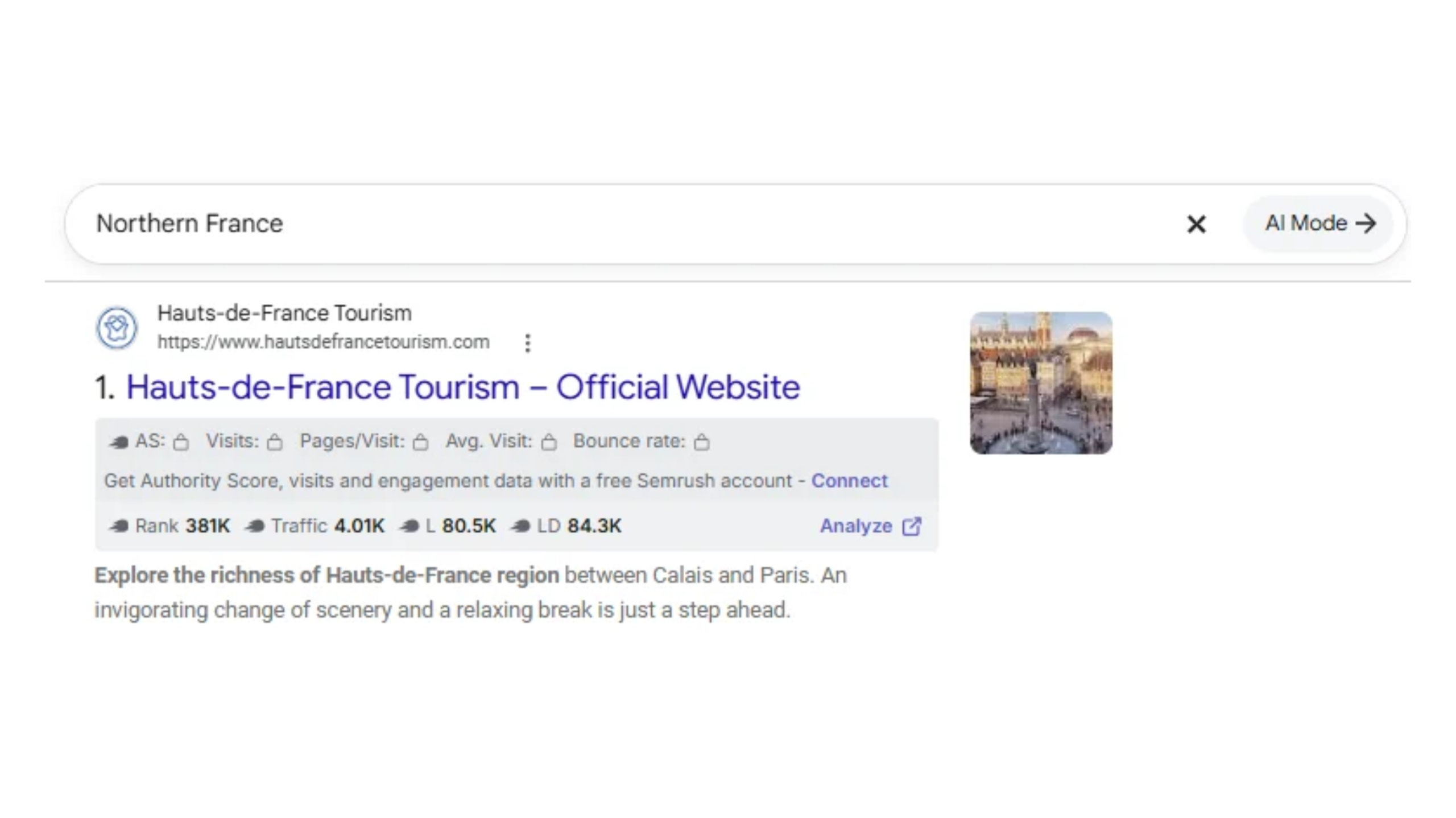
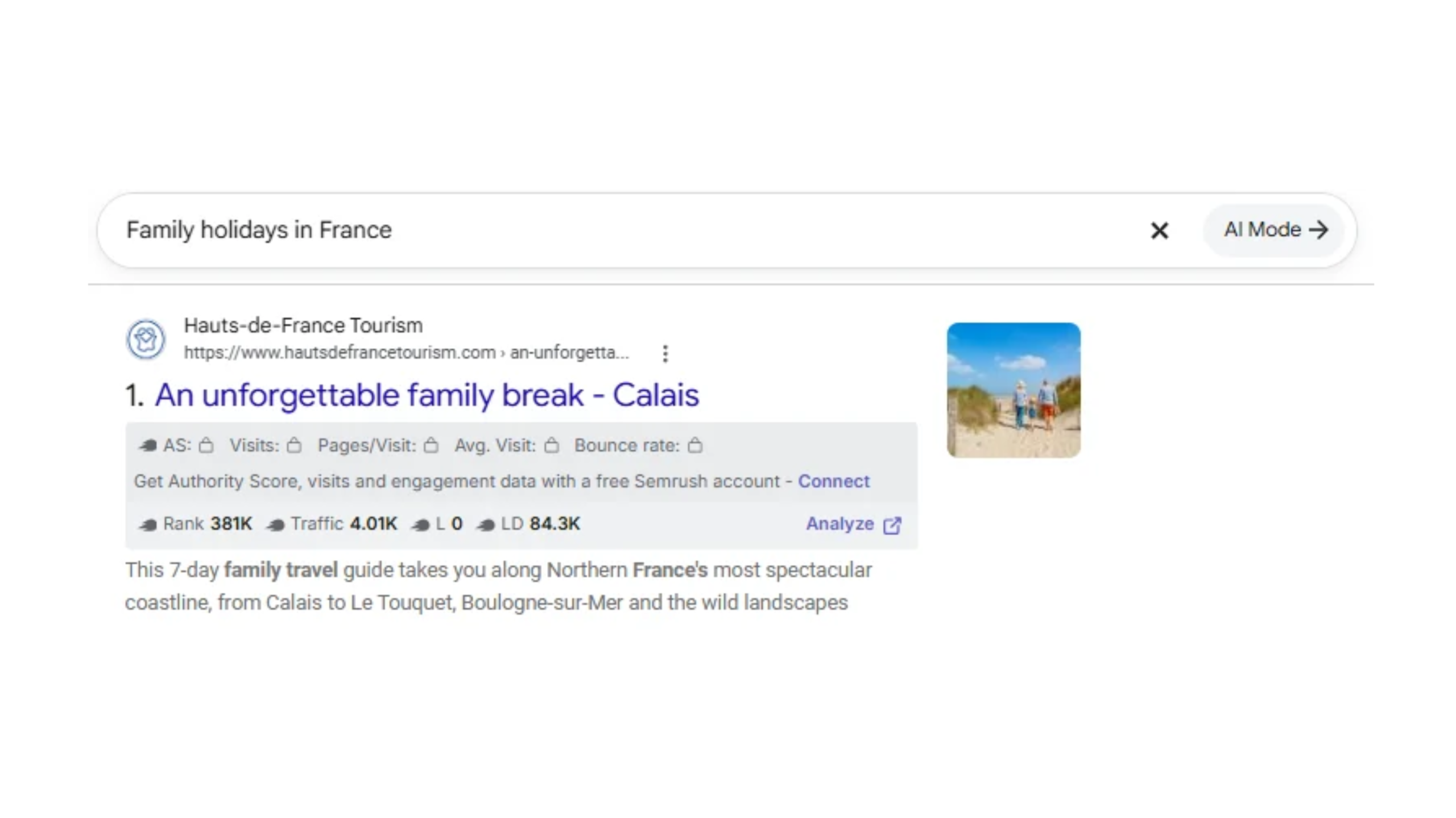
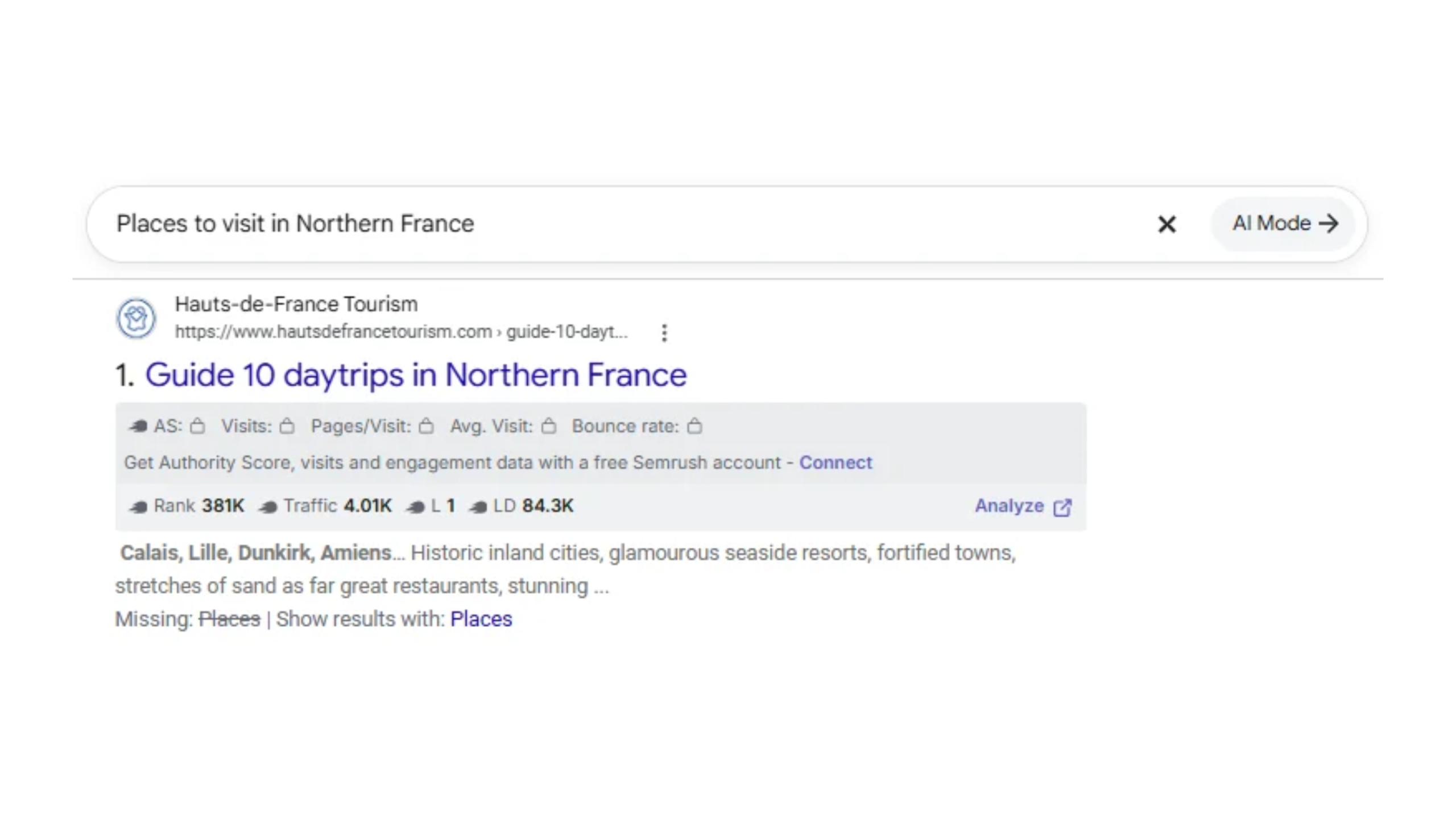
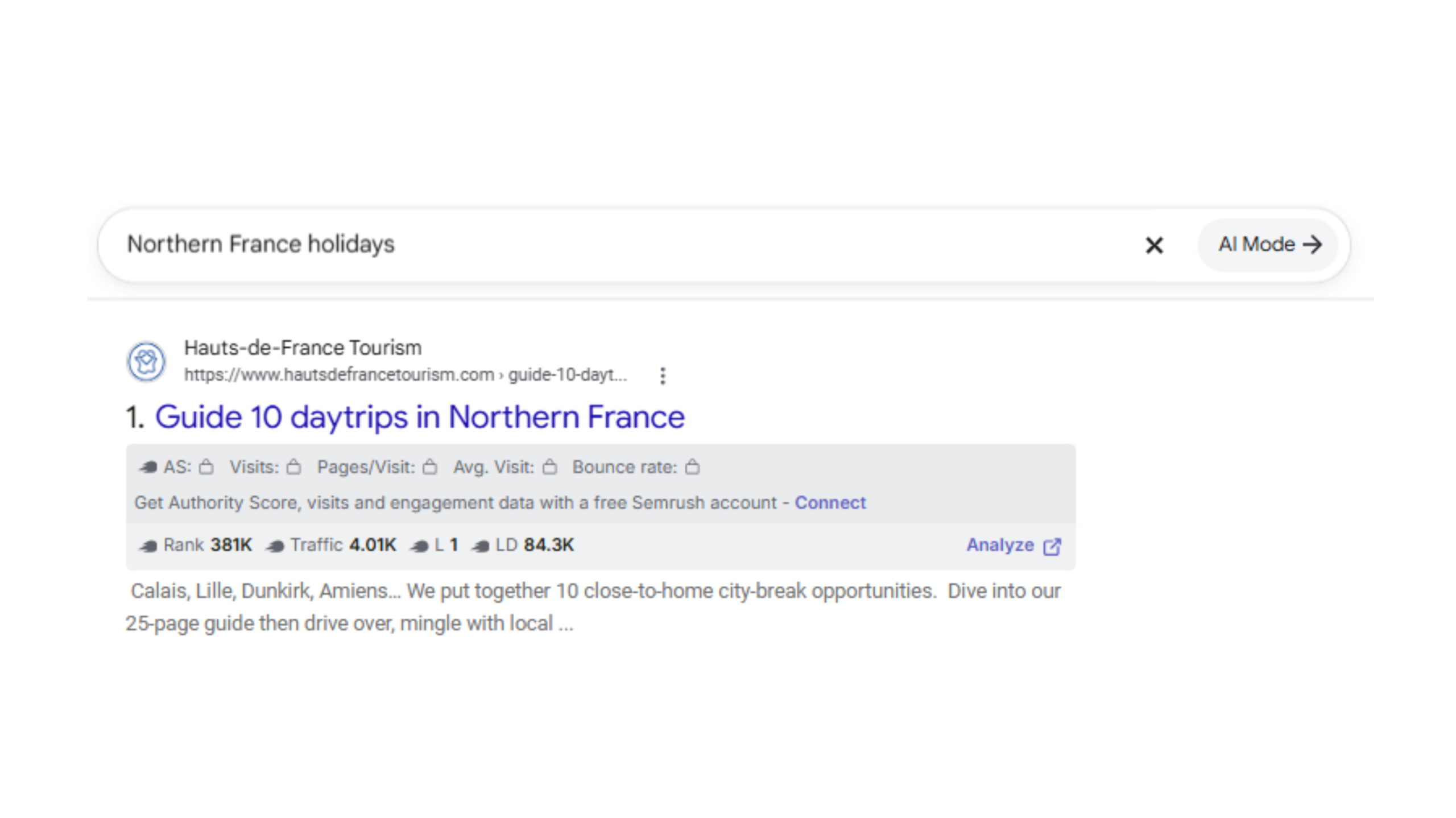
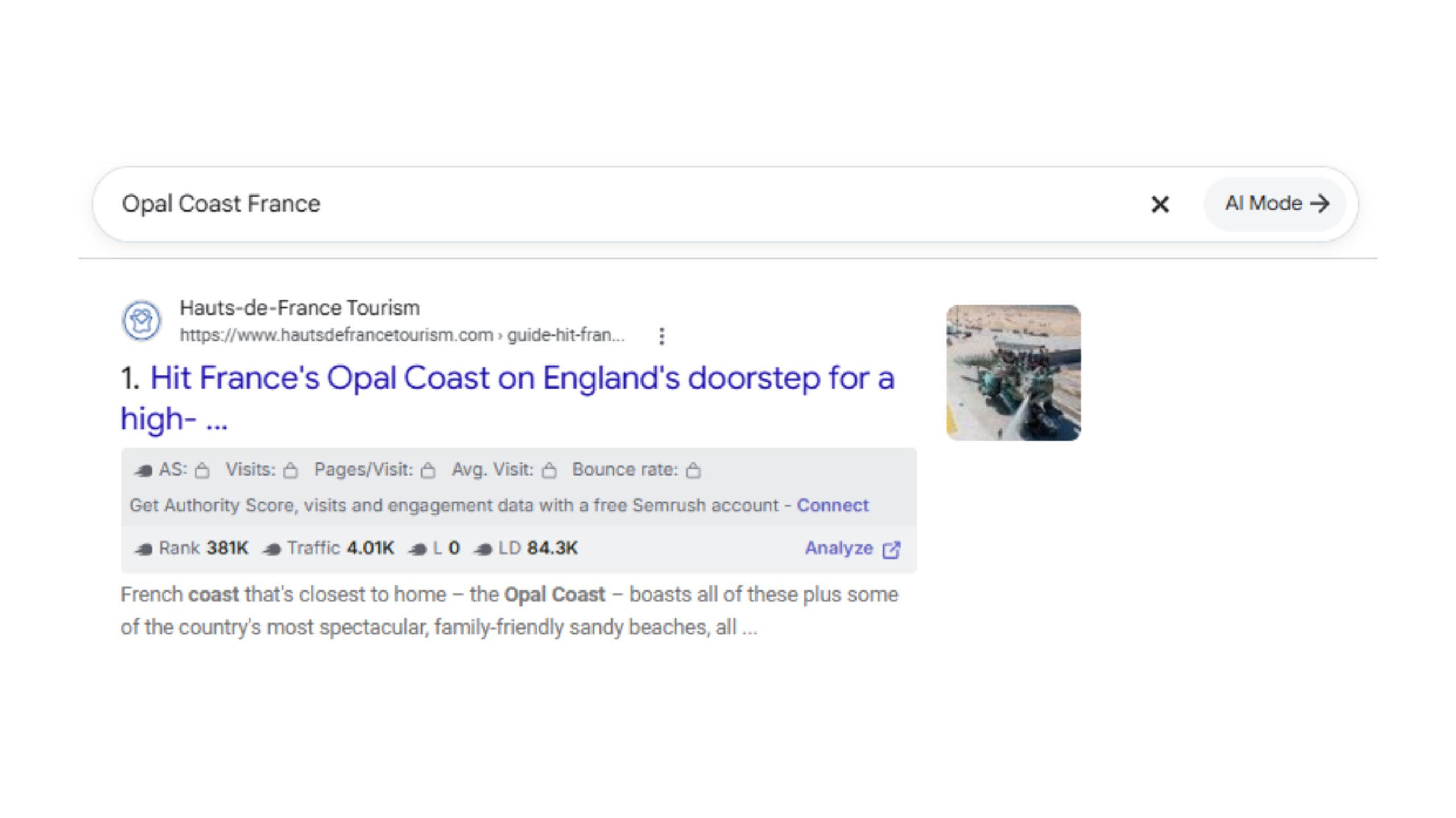
Own the planning search, own the tripy
Own the planning query, own the decision
We targeted the "things to do" and "places to visit" searches head-on and supported them with city, coast and itinerary pages an aggregator listing can't match for depth or authority.
Technical first, content second
Image weight was resolved and crawl paths fixed before new guide content was published, so everything written after that reached the index.
Authority from the right rooms
Links pursued in travel publications, press and tourism directories — the sources that carry weight with people planning a trip.
Measured monthly
GA4 and Semrush data reviewed month over month, with effort pushed toward the terms producing qualified trip-planning traffic rather than raw sessions.