
Specialty Hardwood SEO Case Study
5 months, 1,936% keyword growth for America's black locust pioneer.
The client
About Black Locust Lumber
Black locust decking
Thermally modified siding
Boardwalk systems
Palisade & post fencing
Wood pavers
Ipe alternatives
Accoya alternatives
Architect & builder supply
Project specification
Residential decking
Scope of work
6 problems between a category pioneer and page one
757 visits a month for a category leader
Despite pioneering the domestic rot-resistant hardwood category, the site drew 757 organic visits against a product range covering five distinct categories. The demand existed; it was landing on competitors and marketplaces instead.
High-intent terms buried on page two and three
Decking comparisons, siding searches and "Ipe alternative" queries — the exact searches that precede a specification decision — sat beyond page 2–3 of Google. Only 3 terms held a top-3 position and only 5 reached the top 10.
Product imagery and video throttling the crawl
Heavy product photography and video assets were slowing page speed, while crawl inefficiencies limited how much of the product and project catalogue Google indexed at all.
Five product categories, no consistent targeting
Meta titles, descriptions and headings across the decking, siding, boardwalk, palisade and paver pages lacked coherent keyword targeting, so pages competed with one another instead of each owning a category.
Thin backlink profile in a specification-led niche
Few authoritative links from architecture, construction and sustainable-building publications — the sources that carry weight where specifiers research before they buy — leaving domain authority below what the head terms required.
Nothing written for the questions buyers actually ask
The comparison queries ("black locust vs Ipe," "vs Accoya"), the "where to buy" searches and the application-specific questions around thickness, spans and installation had no pages built to answer them.
Scope of work
The 6-phase build, in the order it had to happen
Keyword research & intent mapping
Ran in-depth research across high-volume head terms and long-tail buyer queries, then mapped every term to a single owning page — product categories, comparison pages and blog content each given their own targets so decking, siding and paver pages stopped competing for the same searches.
Technical SEO & crawl control
Compressed and lazy-loaded heavy product imagery and video assets to lift page speed, fixed crawl errors, redirects and broken internal links across the product catalogue, implemented Product, Organization and FAQ schema, and refreshed XML sitemaps so the full catalogue reached the index.
On-page optimisation across the money pages
Rewrote meta titles, descriptions and headings across the decking, siding, boardwalk, palisade and paver pages with focused keyword targets, and optimised every product and project image with descriptive alt text to open up image-search visibility in a category where buyers shop visually.
Internal linking & comparison architecture
Strengthened internal linking between product pages, the comparison pages (Black Locust vs. Ipe, vs. Accoya) and supporting blog content, so authority earned anywhere on the site flowed into the pages carrying commercial intent.
Content development & off-page authority
Built SEO-focused content answering real specification questions and buyer intent, refreshed and re-optimised existing pages, and ran a link programme through guest posting, citations and outreach to niche architecture, construction and sustainable-building publications.
Measurement, tracking & iteration
Tracked performance in GA4 across users, sessions and event count, monitored ranking movement across the full keyword set, and fed the results back into content and optimisation priorities month over month.
Results — 5-month comparison
4 metrics, 5 months, every one up
Sessions
34K
+122.6%Total users
29K
+136.7%Event count
204K
+83.9%Active users
29K
+137.9%×20
Twenty times the keyword footprint and 80 terms in Google's top 3
Five months in, Black Locust Lumber ranks for 1447 keywords against 41 at the start — a twentyfold expansion of its search footprint. Eighty of those sit in the top 3 positions, up from three. Organic traffic more than doubled from 757 to 1,762 visits, and audience metrics moved with it: users from 12K to 29K, sessions from 15K to 34K, event count from 110K to 204K. Growth exceeding 130% across the core audience metrics, from a strategy built entirely on niche relevance rather than volume.
| Analytics & organic traffic | BEFORE | AFTER | CHANGE |
|---|---|---|---|
| Organic traffic | 757 | 1,762 | +132.76% |
| Total users | 12K | 29K | +136.7% |
| Sessions | 15K | 34K | +122.6% |
| Active users | 12K | 29K | +137.9% |
| Event count | 110K | 204K | +83.9% |
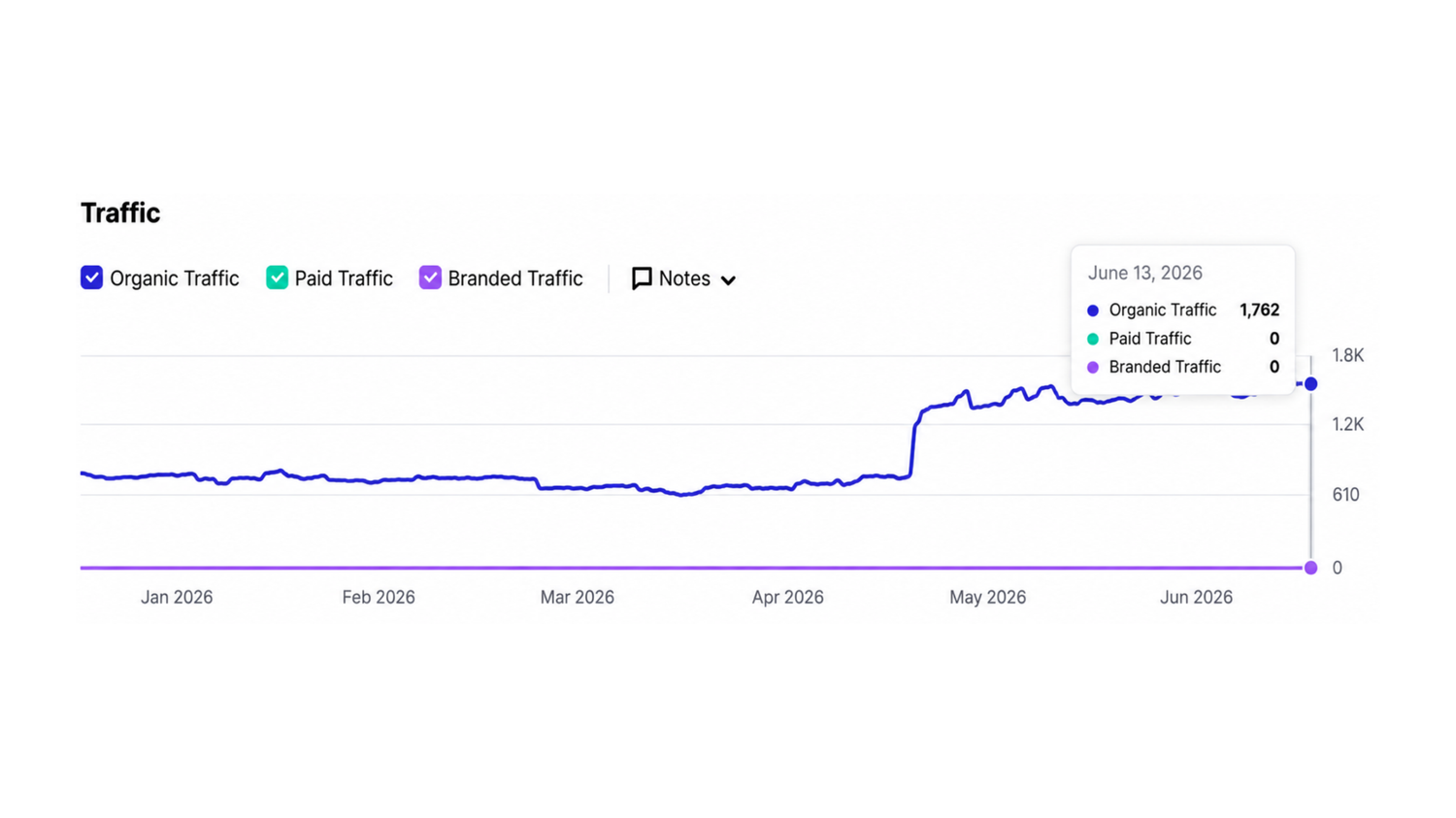
Organic traffic — 757 → 1,762
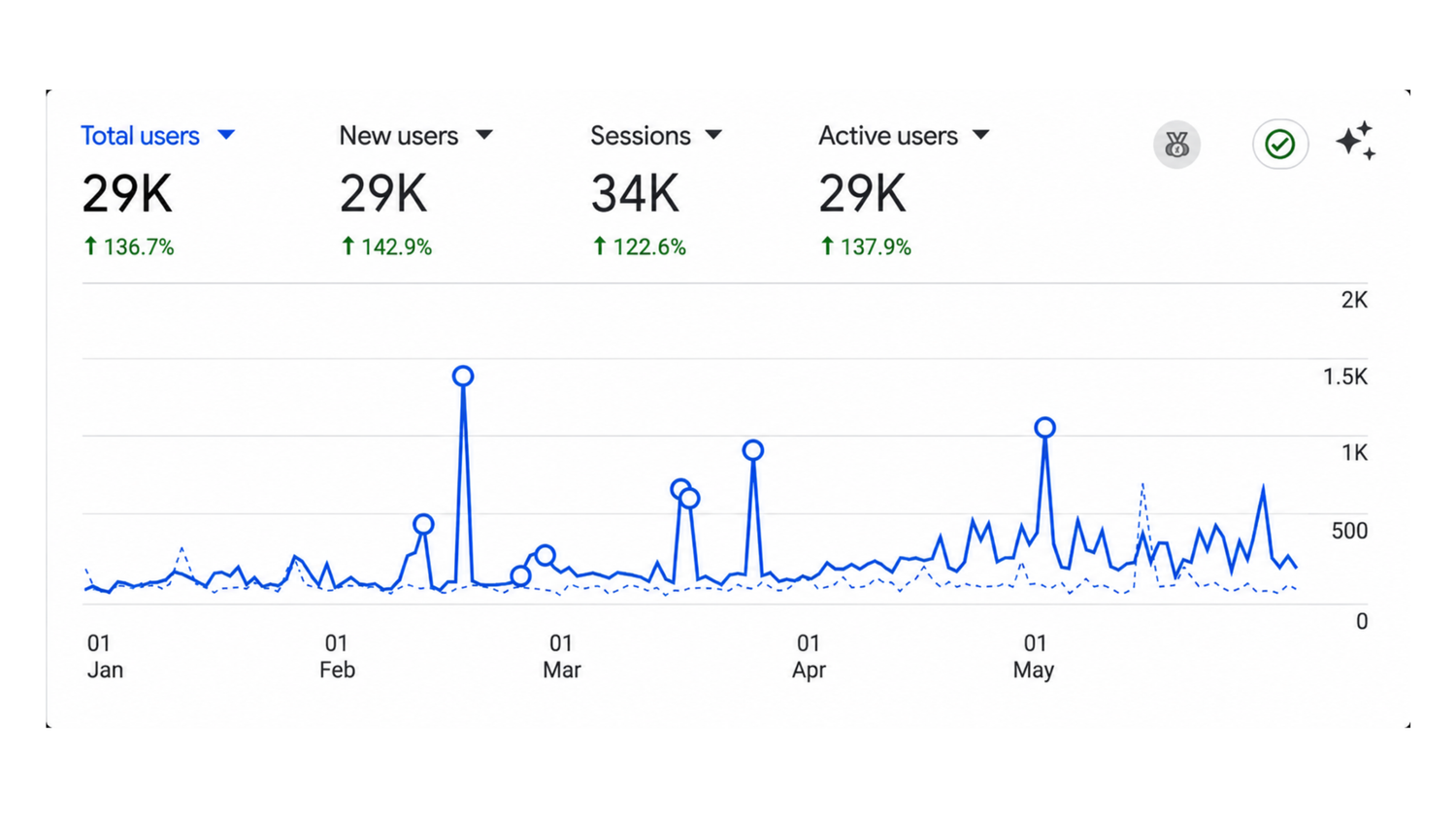
Sessions — 15K → 34K
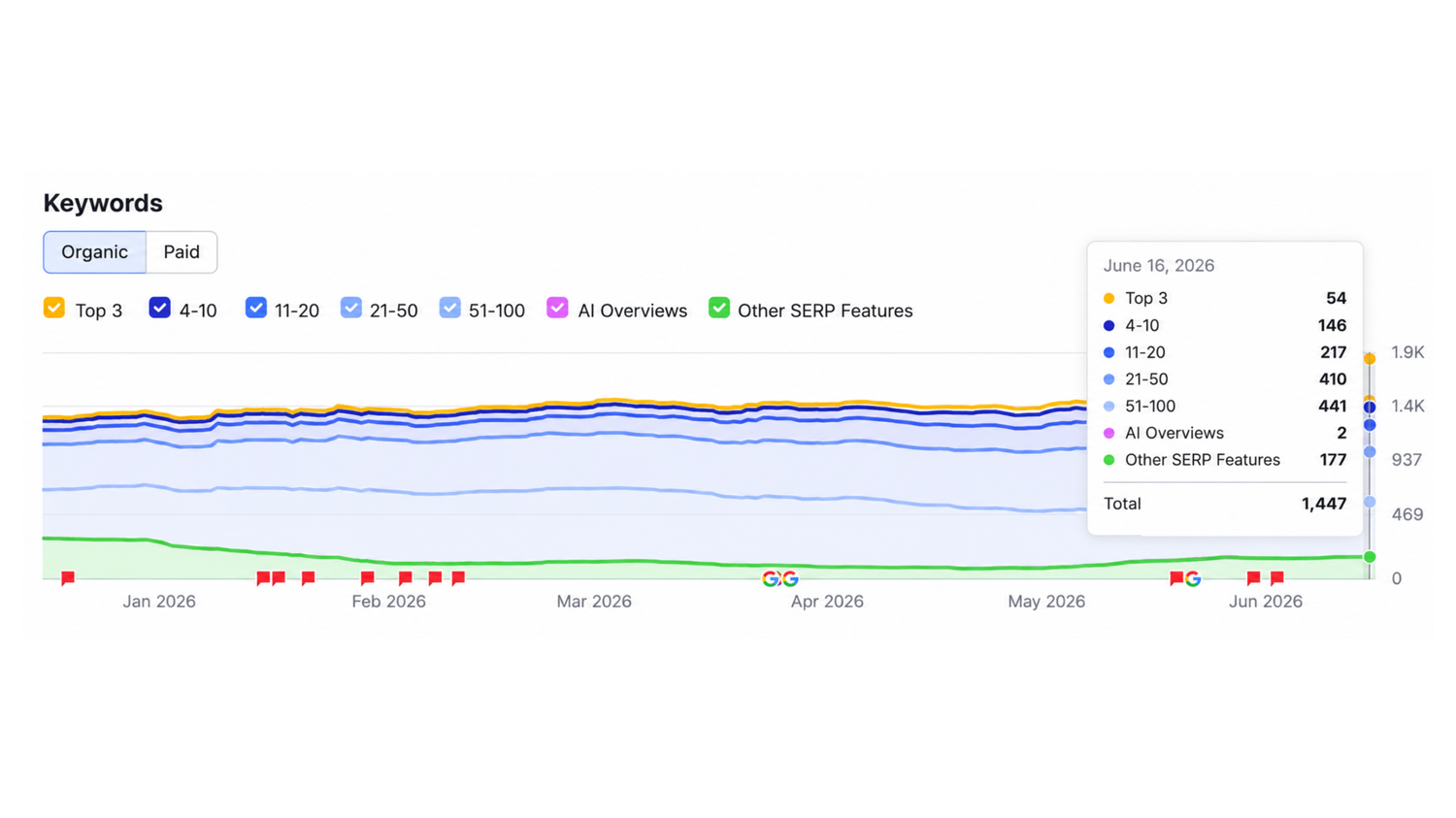
Keyword footprint — 41 → 1447
Google rankings
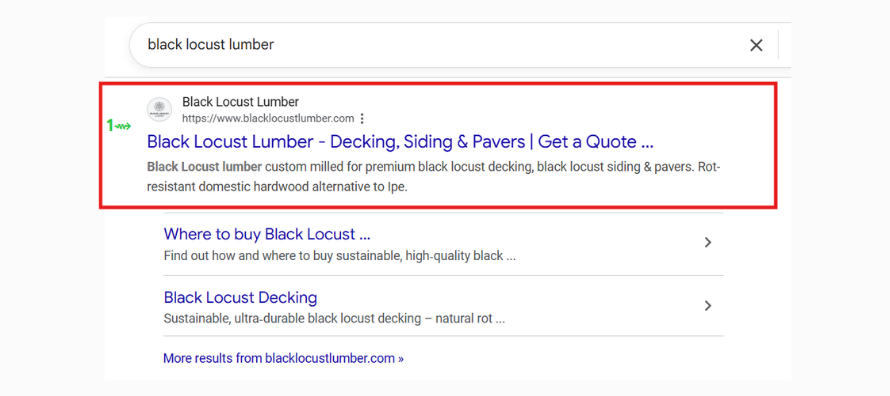
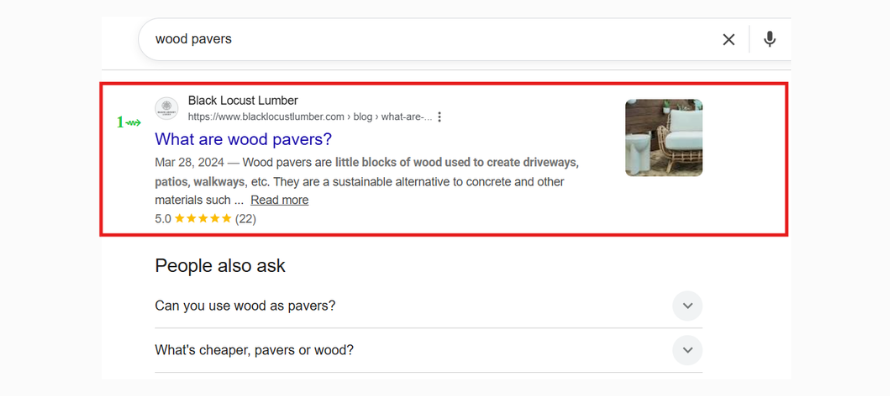
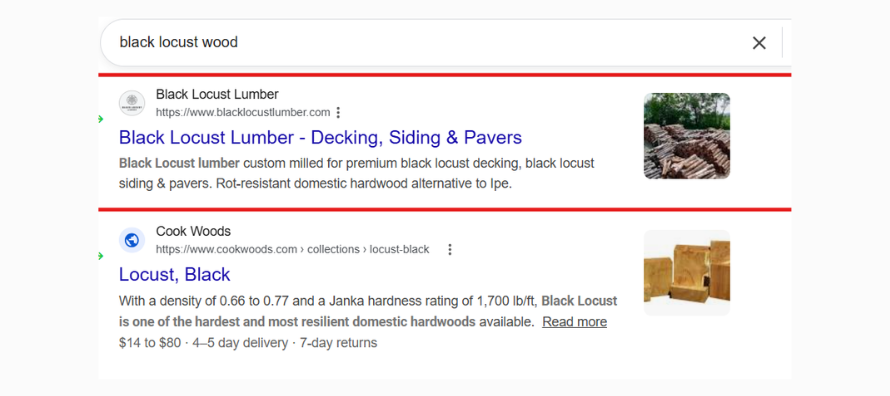
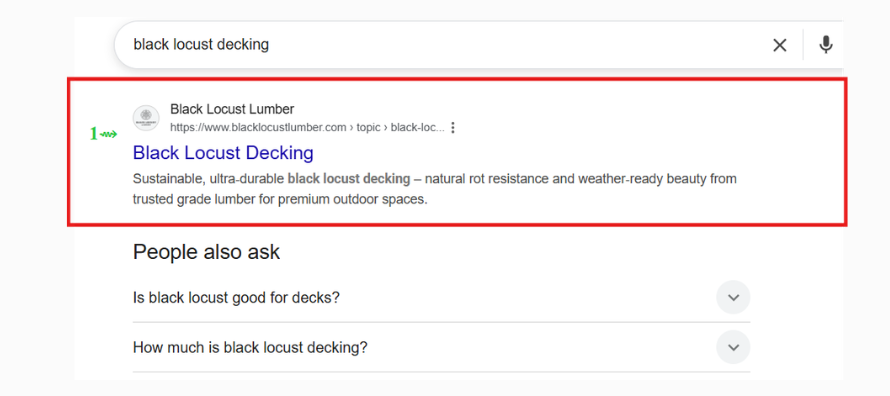
10 high-intent hardwood -keywords at position #1
| KEYWORDS | VOLUME | BEFORE | AFTER |
|---|---|---|---|
| Black Locust Wood | 2,900 | NA | #1 |
| IPE Wood Decking | 2,400 | NA | #1 |
| What is IPE Wood | 1,000 | NA | #1 |
| Black Locust Decking | 880 | NA | #1 |
| Wood Post Fence | 720 | NA | #1 |
| Black Locust Lumber | 720 | NA | #1 |
| Black Locust Decking | 590 | NA | #1 |
| Wood Pavers | 390 | NA | #1 |
| Thermally Modified Wood Siding | 390 | NA | #1 |
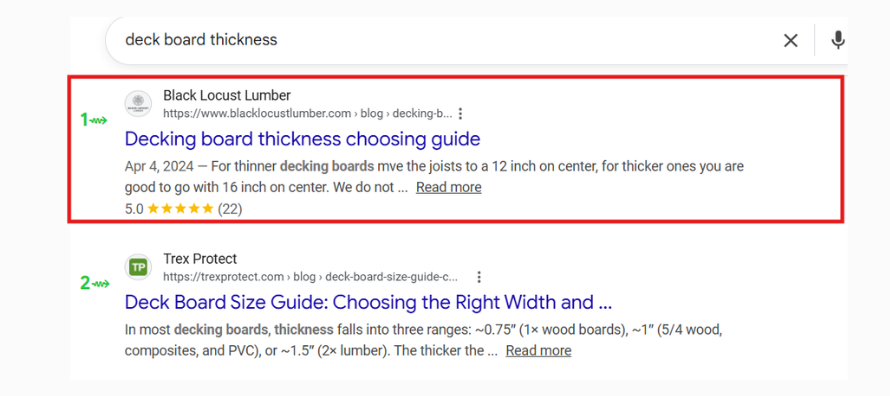
| Deck Board Thickness | 390 | NA | #1 |
Beyond these ten, Black Locust Lumber now ranks across 1447 terms spanning decking, siding, fencing and paver categories — driving qualified architect, builder and homeowner traffic directly to the site.
Key Results
Successfully ranked #1 on Google
Rank #1
Audience insight
What thetraffic data showed
A desktop-first, working-hours audience
The majority of users reached the site on desktop — consistent with a professional specifier audience researching during working hours rather than browsing on mobile.
Domestic core, international reach
Traffic came primarily from the United States, with additional volume from Europe and Asia, indicating reach well beyond the domestic supply market.
5 months, 10 #1 rankings,and a category where one specification can be worth a full project
Own the comparison, own the decision We targeted the "vs Ipe" and "vs Accoya" queries head-on and supported them with application-level pages — thickness, spans, fencing, pavers — that a marketplace listing can't answer.
Technical first, content second Image and video weight was resolved and crawl paths fixed before a single new page was published, so everything written after that reached the index.
Authority from the right rooms Links pursued in architecture, construction and sustainable-building publications — the sources that carry weight with the people who write specifications.
Measured monthly GA4 and ranking data reviewed month over month, with effort pushed toward the terms producing qualified specifier traffic rather than raw sessions.